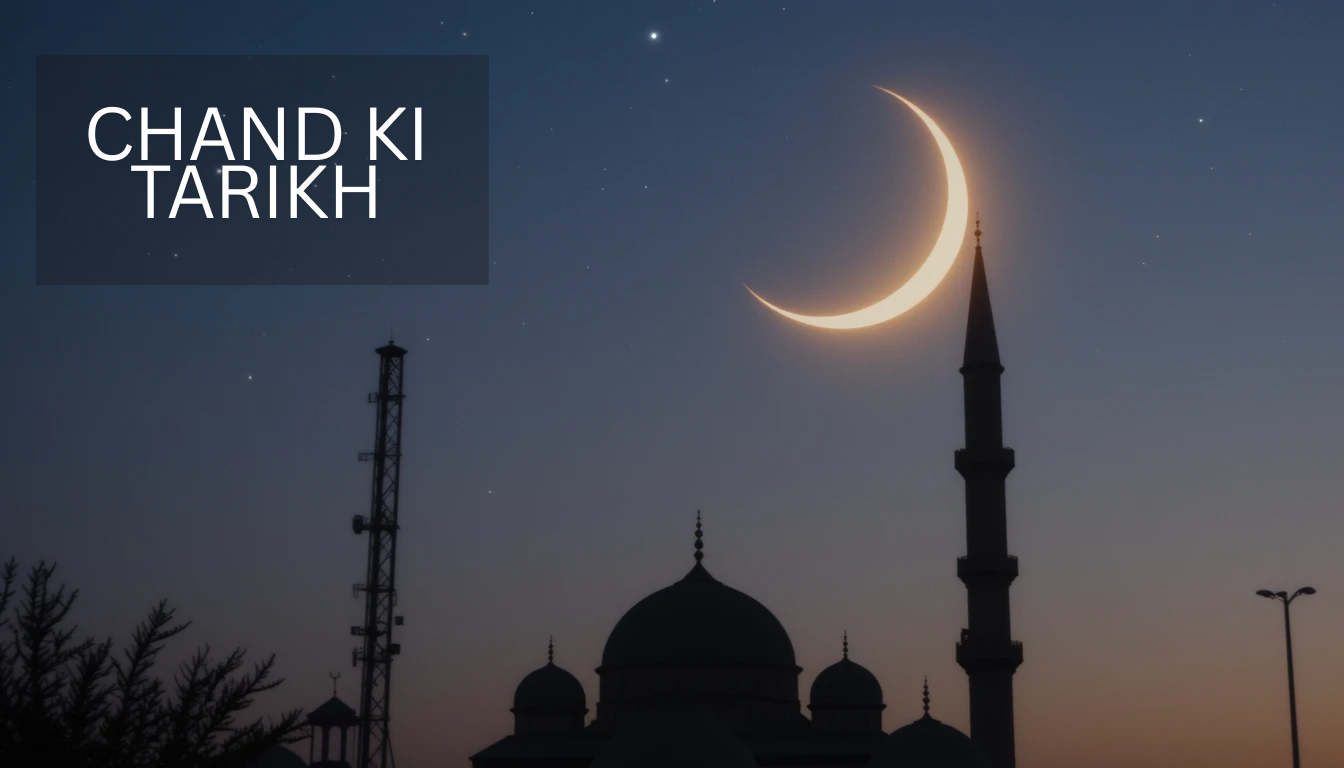
In the Muslim world, knowing and understanding the Chand ki tarikh or the Islamic lunar date is a significant part of daily life. The Islamic calendar, also known as the Hijri calendar, relies on the phases of the moon, making the Chand ki tarikh an essential aspect for marking religious events, celebrations, and daily spiritual activities. This blog will explore what Chand ki tarikh means, how it is calculated, the importance of Chand ki tarikh today, and why staying updated with the Islamic chand ki tarikh today helps millions of Muslims worldwide stay connected with their faith.
What is Chand ki Tarikh?
Chand ki tarikh literally translates to “moon date,” referring to the date based on the moon’s cycle in the Islamic lunar calendar. Unlike the Gregorian calendar, which is solar and based on the Earth’s orbit around the sun, the Islamic calendar is lunar, consisting of 12 months that are each either 29 or 30 days long, totaling 354 or 355 days in a year. This is about 10 to 12 days shorter than the Gregorian calendar, which means the Chand ki tarikh shifts each year when compared to the Gregorian date.
The Islamic calendar starts with the month of Muharram and continues through twelve months: Muharram, Safar, Rabi al-Awwal, Rabi al-Thani, Jumada al-Awwal, Jumada al-Thani, Rajab, Sha’ban, Ramadan, Shawwal, Dhul Qadah, and Dhul Hijjah.
Each month’s beginning is determined by the actual sighting of the new moon, making the Chand ki tarikh a dynamic system rather than a fixed numerical calendar.
Importance of Chand ki Tarikh Today
Knowing the Chand ki tarikh today is crucial for Muslims all over the world because many Islamic rituals, festivals, and prayers are observed on specific lunar calendar dates. For example, the month of Ramadan is determined by the sighting of the moon and marks the beginning of fasting. The celebration of Eid-ul-Fitr is confirmed by the sighting of the moon on the 29th or 30th day of Ramadan.
Islamic legal rulings (Shariah) related to fasting, Hajj, and zakat donations also depend on the current Islamic date or Chand ki tarikh today. Thus, keeping track of the Chand ki tarikh is necessary for religious observance and community coordination.
How is Chand ki Tarikh Calculated?
The calculation of Chand ki tarikh is based on lunar observations rather than astronomical estimations alone. Traditionally, Muslim countries and communities rely on moon sighting committees, such as Ruet-e-Hilal committees, which look for the crescent moon to announce the start of every new month.
Because the moon’s appearance can differ depending on geographical location and weather conditions, the Chand ki tarikh today might vary by country or region. This is why sometimes the Islamic date is different in Saudi Arabia compared to Pakistan, Bangladesh, or India.
However, with modern technology, many calendars now use astronomical calculations combined with moon sighting reports to provide an accurate Islamic chand ki tarikh today online, accessible through websites and apps.
Current Islamic Date and Chand ki Tarikh Today
As of September 10, 2025, the current Islamic date or Chand ki tarikh today is 16 Rabi ul Awwal 1447 AH in countries such as Pakistan, India, and Bangladesh. In some Arab countries, the date is reported as 18 Rabi ul Awwal 1447 AH due to geographical differences in moon sighting.
This day, 16 Rabi ul Awwal, holds profound significance for Muslims as it belongs to the month of Rabi al-Awwal, which is especially revered since it marks the birth month of the Prophet Muhammad (PBUH).
Knowing the Chand ki tarikh today helps Muslims plan their religious obligations, celebrations, and community gatherings harmoniously.
Tools to Check Chand ki Tarikh Today
With the importance of the Chand ki tarikh in daily Islamic life, many online platforms now offer real-time updates for the current Islamic date. People worldwide can easily check the Chand ki tarikh today on websites dedicated to Islamic calendars or mobile applications.
These tools typically update as per local moon sightings or global astronomical data to give accurate readings of the Islamic chand ki tarikh today. Many apps also provide prayer times, Ramadan schedules, and other religious alerts based on the lunar calendar.
Why Muslims Care About Chand ki Tarikh
For Muslims, the moon holds not just practical but deep spiritual and cultural significance. The lunar calendar governs almost all aspects of Islamic rituals:
- Ramadan: The fasting month begins and ends based on Chand ki tarikh.
- Eid Celebrations: Eid-ul-Fitr and Eid-ul-Adha are observed according to the lunar months.
- Hajj: Islamic pilgrimage timing depends on the 12th month of the lunar calendar.
- Fasting Days: Days like Ashura and the white days require knowing the correct Chand ki tarikh.
Thus, accurate knowledge of the Chand ki tarikh is vital for religious observance and marks the rhythm of Islamic life.
The Difference Between Gregorian and Islamic Dates
The difference between the Gregorian solar calendar and the Islamic lunar calendar sometimes causes confusion. The Chand ki tarikh shifts by about 10 to 12 days earlier every year compared to the Gregorian date. This means that Muslim festivals move through the seasons of the year over a cycle of about 33 years.
For example, Ramadan might fall in winter one year and then gradually move to summer. This mobility is a unique feature of the Islamic lunar calendar, controlled by the moon phases rather than the sun.
How to Use Chand ki Tarikh in Daily Life
Keeping track of the Chand ki tarikh today is a daily habit for millions of Muslims. Besides religious purposes, the lunar calendar is often used to determine:
- Marriage dates
- Starting new ventures or business activities
- Agricultural cycles in some Muslim-majority regions
In the modern age, synchronizing the Chand ki tarikh with Gregorian dates using apps and online calendars helps with both personal and community planning.
Cultural Significance of Chand ki Tarikh
Beyond religion, Chand ki tarikh is embedded in Muslim culture and tradition. Lunar festivals, poetry, and folklore often revolve around the phases of the moon. The moon is a symbol of beauty, time, and divine rhythm.
In Islamic art and architecture, motifs of the crescent moon are common and represent faith and the celestial order. Thus, Chand ki tarikh resonates emotionally and spiritually beyond mere date tracking.
Challenges in Determining Chand ki Tarikh
Determining the exact Chand ki tarikh can sometimes be challenging due to:
- Weather conditions obscuring the moon sighting
- Geographical differences causing varied moon appearance times
- Differences in interpretation of sighting criteria among Islamic scholars
These factors sometimes lead to differences in announcing the start of months like Ramadan or Shawwal in different countries or communities. However, technological advancements and community consensus often harmonize these variations.
Frequently Asked Questions
What is Chand ki tarikh?
Chand ki tarikh refers to the lunar or moon-based date in the Islamic calendar, which is calculated based on the sighting of the new moon. It determines Islamic months and religious events.
Why is Chand ki tarikh important for Muslims?
Chand ki tarikh is crucial because many Islamic rituals such as Ramadan, Eid, Hajj, and fasting days depend on the lunar calendar dates, helping Muslims observe these events at the correct time.
How is the Islamic Chand ki tarikh today determined?
The Islamic Chand ki tarikh today is determined by moon sighting committees or using astronomical calculations that consider moon phases, adjusted by local sightings and reports.
What is the difference between Chand ki tarikh and the Gregorian date?
Chand ki tarikh follows the lunar calendar with months based on moon cycles, which is about 10 to 12 days shorter than the Gregorian solar calendar, so Islamic dates shift annually relative to Gregorian dates.
Can Chand ki tarikh today vary by country?
Yes, Chand ki tarikh today can vary due to geographical location, weather conditions, and differences in moon sightings, meaning some countries may observe Islamic months starting on different days.
Where can I check the current Chand ki tarikh today?
Current Chand ki tarikh today can be checked through various online platforms, Islamic calendar websites, and mobile apps that update lunar dates based on moon sightings and region.
How many months are there in the Islamic Chand ki tarikh calendar?
The Islamic lunar calendar consists of 12 months, each either 29 or 30 days long, totaling 354 or 355 days in a year according to the Chand ki tarikh.
What are some significant months in Chand ki tarikh?
Important months include Ramadan, the month of fasting; Dhul Hijjah, the month of Hajj pilgrimage; and Rabi al-Awwal, the month of the Prophet Muhammad’s birth.
Does Chand ki tarikh affect daily Muslim life besides religious duties?
Yes, Chand ki tarikh also influences cultural traditions, marriage dates, agricultural practices, and community events in Muslim societies.
Why do some Islamic months have 29 or 30 days in Chand ki tarikh?
This variation depends on the actual moon sighting; if the crescent moon is not seen on the 29th day, the month completes 30 days, which is why months alternate between these lengths.
Conclusion
The Chand ki tarikh is not just a date but a living tradition deeply embedded in Islamic faith and practice. Knowing the Chand ki tarikh today connects Muslims to their religious duties, celebrations, and cultural heritage. With tools and awareness, everyone can access the Islamic chand ki tarikh today in real-time and live by its spiritual guidance.
By embracing the lunar cycle and respecting its rhythms, the Muslim community worldwide continues to honor the legacy of the Hijri calendar, which is both a scientific marvel and a spiritual compass.
Read more about : الاسطورة tv
traffic rider mod apk
snapchat planets
augusta precious metals lawsuit