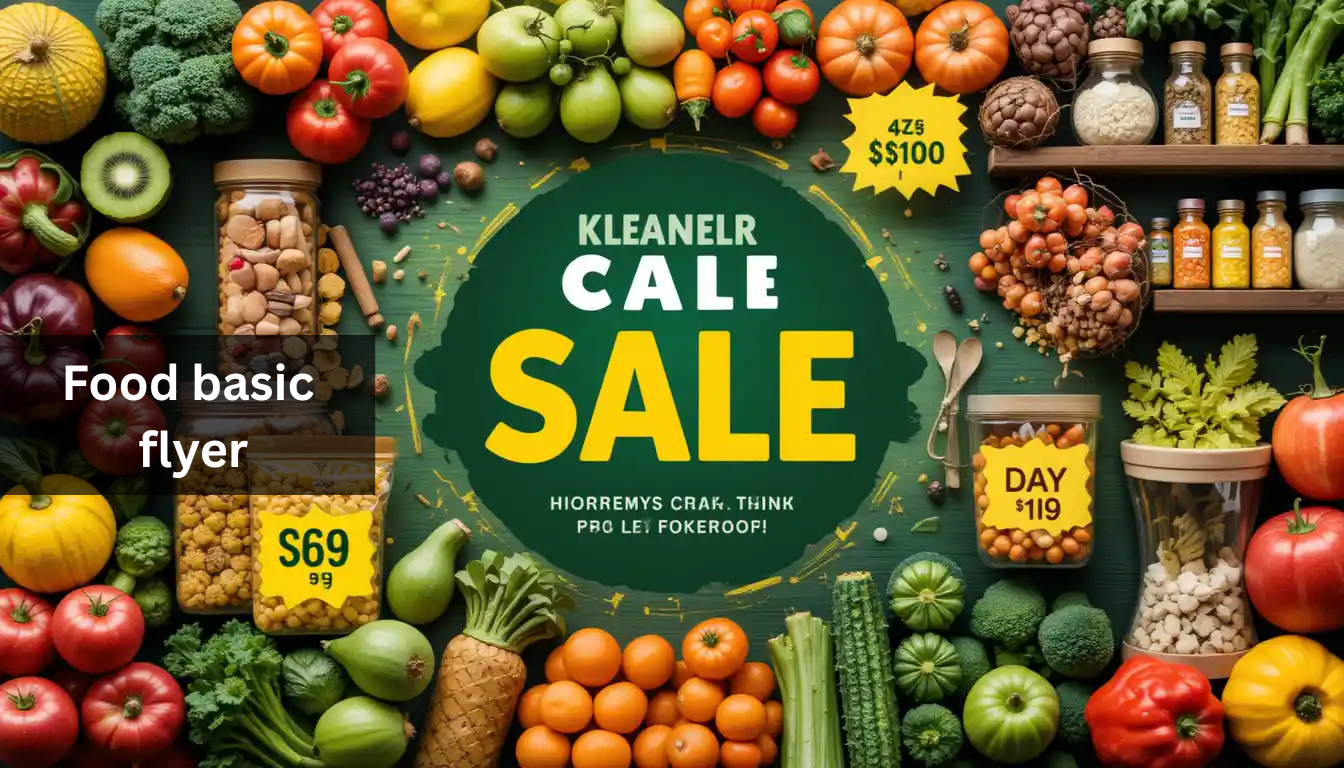
In today’s competitive retail landscape, a well-designed food basic flyer serves as a powerful marketing tool that can significantly impact customer engagement and sales. As a grocery store owner, restaurant manager or food retailer, you need to realize that the key to business success is to know how to make attractive promotional materials. This step-by-step guide will take you through all that you need to know about creating effective food marketing flyers that attract attention and deliver results.
Knowing the Purpose of Food Marketing Flyers
A food basic flyer functions as a direct communication channel between businesses and potential customers. These marketing tools have several functions: they inform the customers about the ongoing offers, present new products, present the seasonal offers, and create brand awareness. The success of your flyer is directly proportional to the amount of foot traffic, sales volumes and customer retention rates.
The main aim of any food promotional material is to generate urgency and stimulate taking action immediately. Customers are also likely to come to your establishment within a certain period of time when they get enticing offers on basic foodstuff. Such urgency is essential to businesses in the fast food retail business.
Flyer Design Elements That Grab Attention
Creating an eye-catching food basic flyer requires careful attention to visual design elements. In food marketing, color psychology is important, and warm colors such as red, orange, and yellow are usually used to induce appetite and generate a sense of excitement and urgency. These colors can be used especially when trying to sell something and limited offers.
Even the typography is important. Easy to read fonts that are bold will make sure that your message is communicated to customers even when they are skimming through the promotional materials. Sans-serif fonts are usually suitable when it comes to the use of headers and prices whereas serif fonts can be used to add elegance to the description of premium products.
The structure must be logical and the most significant information should be placed in the most visible position. Offers should have price points, product names, and expiration dates that are instantly visible. White space usage helps prevent overcrowding and maintains readability, ensuring that your food basic flyer doesn’t overwhelm potential customers with too much information.
Maximum Impact Content Strategy
The good content strategy is not just an enumeration of products and prices. Your food basic flyer should tell a story that resonates with your target audience’s needs and preferences. Emphasize benefits over features, rather than simply saying that you have fresh vegetables, you should tell customers how these ingredients can be used to prepare healthy and tasty meals to their families.
The seasonal relevance is a great asset to your promotional material. In summer, emphasize barbecue staples, fresh fruits and refreshing drinks. Winter campaigns may include comfort foods, holiday baking supplies, and warm drinks. This seasonal strategy will make your flyer look and feel current and in line with the present needs of the customers.
Adding recipe ideas or meal suggestions will turn a mere product listing into useful information that the customers will value. When individuals get to know how to utilize the products you are marketing, they would tend to buy more products and this would raise your average transaction value.
Marketing and Pricing Psychology
Understanding pricing psychology is crucial for creating an effective food basic flyer. Charm pricing involves the prices ending in 9 or 99 and this gives the impression of a better value. Package offers also make customers buy more products and feel that they are getting a great deal out of their money.
Limited-time offers induce a sense of urgency that encourages fast decision-making. Such phrases as This Week Only, While Supplies Last, or Limited Time Offer are used to make the customers take immediate actions instead of delaying their shopping. But be careful with such tactics so as not to lose credibility and trust among your customer base.
Comparison pricing, which displays original prices and sale prices, can also assist customers in knowing what they are getting. Such openness creates trust and makes the deal more tangible, which increases the chances of buying.
Distribution Channels and Time
The success of your food basic flyer depends not only on its content and design but also on how and when you distribute it. The traditional forms of distribution are direct mail, newspaper inserts, and in-store displays. Nevertheless, digital distribution via email marketing, social media, and your business site has gained importance.
The best time to distribute your flyer is at the right time. Studies indicate that customers normally make their grocery shopping plans during the middle of the week, and Wednesday and Thursday are the best days to distribute flyers. This timing gives the customers time to check out the deals and schedule their shopping trips on the weekend when they are less busy.
When distributing, take into consideration the shopping habits of your local community. There are neighborhoods that will shop on weekends and others that will shop in the evenings of the weekdays. Knowing these trends will assist you in reaching customers at the best time that they will be responsive to your promotional offers.
ROI and Measurement of Success
Tracking the effectiveness of your food basic flyer campaigns is essential for continuous improvement and budget optimization. Use tracking tools like special coupon codes, QR codes that lead to a particular landing page, or special promotional words that the customer can use when they are in the store.
Analysis of sales data before, during, and after the flyer distribution will give important information on the performance of the campaign. Seek to find increment in foot traffic, average transaction value, and sale of promoted items. This information will enable you to know what product, pricing, and design features are most appealing to your target market.
The qualitative data that you can obtain about the customers through surveys, social media, or even talking directly to the customers will supplement your quantitative data. Learning about the reasons why some promotions worked and others did not assists in the future development of promotions.
New Approaches & Digitalisation
Modern food basic flyer campaigns benefit from digital integration. The gap between physical and digital marketing campaigns is closed by QR codes that direct to online stores, recipe databases or loyalty program sign-ups. This integration will bring more value to the customers and will establish new touchpoints to maintain further contact.
Social media amplification goes beyond conventional distribution channels of your flyer. When you encourage customers to post your promotions on their social media accounts, it generates organic word-of-mouth marketing that generates brand awareness and credibility.
Email marketing integration allows you to deliver your food basic flyer directly to interested customers’ inboxes. It is a cost effective strategy that is usually more effective than the broad spectrum distribution methods because it has a higher response rate especially when a company has an established customer database.
What Not to Do
There are a number of pitfalls that can ruin the success of your promotional materials. Overcrowding your food basic flyer with too much information overwhelms customers and reduces the impact of your most important messages. Emphasis should be put on the best deals and most attractive products as opposed to attempting to cover everything.
Illegible or unclear text is frustrating to potential customers, and it is a bad sign of attention to detail in your business. Never make the final design without testing the readability of your flyer at actual size. What appears to be readable on a computer screen can be hard to read when printed out on regular flyer size.
Variations in the branding of various marketing materials confuse the customers and dilute brand recognition. Make sure your flyer is consistent with your general branding, with the same colours, fonts, and messages that your customers are used to seeing in your business.
New Things and Trends
Future of food marketing flyers will involve more personalization by using data analytics and customer behavior tracking. Variable data printing can be achieved with advanced printing technologies and businesses can use flyers that are customized to a specific customer segment or geographic region.
Consumers are increasingly becoming concerned with sustainability. Eco-friendly paper, advertising locally-sourced products, and emphasizing sustainable business practices in your advertising materials is attractive to environmentally-conscious customers.
The use of augmented reality is a new business opportunity. QR codes to AR experiences that display recipe demonstrations, nutritional facts, or product origin stories bring in interactive features that make customers more engaged.
Conclusion
Creating an effective food basic flyer requires careful attention to design, content, timing, and distribution strategies. You can create promotional materials that lead to significant business outcomes by knowing the needs of your target audience, applying good design principles, and constantly assessing and adjusting your strategy. The key to success in food retail marketing is to be creative and strategic, so that each flyer should meet your business goals and the needs of your customers.